
最美和声
杂草坑变小花园 “同心亭”成议事厅_我的网站

A | 8月7日,雄安新区南文社区弘文花园小区的“同心亭”内,社区工作者、居民、物业工作人员等在共同议事。
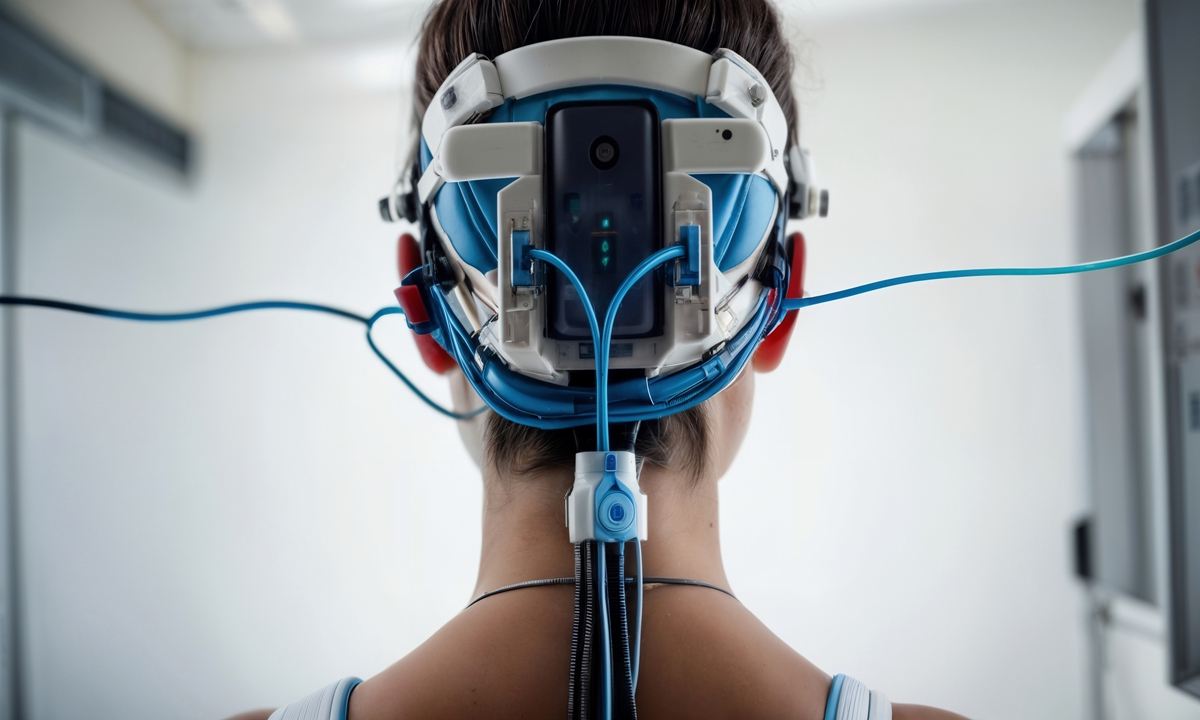
Chinese researchers have developed a multifunctional electrode coating that addresses key challenges in long-term brain-computer interface (BCI) implantation, including signal loss and tissue adhesion, bringing BCI one step closer to clinical application, the Global Times learned from the research team behind the findings on Sunday.
As an emerging field combining neuroscience and artificial intelligence (AI), BCI faces a major challenge of ensuring long-term compatibility between electrodes and brain tissue. Previous clinical trials showed that immune responses could cause implanted electrodes to retract after just three months, severely reducing signal quality and the number of available channels.
This problem stems from chronic inflammation triggered by implants, which creates insulating scar tissue around electrodes and separates them from neurons. Irreversible adhesion between electrodes and brain tissue after long-term implantation also makes device removal risky, potentially causing brain injury during follow-up surgeries.
Experiments showed that flexible neural electrodes coated with this material could operate stably in the brain for more than 300 days and could be safely removed without causing damage. This means the universal coating technology can make electrodes not only operate stably over the long term but can also be safely removed and replaced after aging, paving the way for long-term BCI applications.
Developed by the research team led by Zhang Wei at the Technical Institute of Physics and Chemistry, Chinese Academy of Sciences, associated with Beijing Tiantan Hospital, Shanghai Institute of Microsystem and Information Technology and NeuroXess, a high-tech life science company specializing in BCI technologies, the cationic alternating peptide electrode coating preserves electrode flexibility and conductivity, while offering antibacterial, anti-protein adsorption and immune-rejection-inhibiting functions.
A 300-day animal study showed the coating's effectiveness. Bare electrodes experienced a sharp loss of recording capability after 90 days of implantation and could barely detect neuronal signals after 300 days. In contrast, coated electrodes maintained stable recording channels and consistently captured neural signals above 155 microvolts.
In terms of neural modulation, after 300 days of implantation, conventional electrodes required a current of 100 microamps to induce weak limb responses, while coated electrodes triggered clear movements with only 2 microamps, improving modulation efficiency by 50 times.
Notably, the removal tests highlighted a key advantage of the coating that electrodes no longer form irreversible bonds with brain tissue. In the experiments, the coated electrodes were removed intact, with minimal damage to the surrounding brain tissue, Zhang told the Global Times on Sunday.
。

B | 日报记者 刘光昱摄“最近有人反映小区内有乱丢垃圾行为,咱们今天说说这事儿。”8月7日,雄安新区南文社区弘文花园小区的中心庭院内,社区工作者、居民、物业工作人员围坐在一起,共同商讨如何搞好小区环境卫生。话题一打开,现场气氛立刻热烈起来。“可以多设几个提示牌”“发动一些志愿者,加强提示和监督”……大家你一言我一语,没多久便商议出几条切实可行的措施。这个环境优美的庭院,既是居民议事的场地,也是休闲娱乐的空间。然而,几个月前,这里还是一片杂乱荒芜、无人问津的闲置角落。

C | “以前,庭院凉亭没有封顶,儿童游乐设施需要维修,居民的花盆摆放散乱。

D | 发现这些问题后,我们就想着把庭院改造一下。”南文社区党总支书记王硕说。经过一个多月的改造,一个全龄友好空间惊艳亮相——居民纷纷将花盆搬到这里,由志愿者统一管理,曾经的杂草坑变为花香四溢的小花园;没有封顶的凉亭安装了顶棚,亭身涂上不同颜色,被命名为“同心亭”;地面铺上了塑胶,座椅加装了靠背,一旁的架空层安装了电风扇、棋盘、桌椅等设施;墙面画上了生动的图案,“讲文明、树新风”的标语清晰醒目。“庭院改造后环境变好了,功能增多了,大家几乎每天都来这儿遛弯、下棋。”75岁的社区居民王晓龙说。完成改造的庭院,成为居民议事的重要阵地。每周一次,社区工作人员把桌椅搬到“同心亭”内,收集民意、商讨问题、化解矛盾。

E | 从修剪遮挡阳光的树冠,到修补破损的地砖,再到增加电动车车棚……通过居民的集体参与、集中讨论、集思广益,一项项惠民举措落到了实处。

F | 居民白军芬深有感触地说:“以前有问题不知道找谁说,现在亭子里坐一坐,拉拉家常就把问题解决了。”一方庭院,汇聚的是邻里情,落实的是民生实事。居民们在共商共建中找到了归属感,提升了幸福感。“我们将持续聚焦居民需求开展议事,让这个庭院不仅美在‘面子’上,更暖在群众的‘心坎’里。”王硕说。(日报记者 康晓博)。
Current article:http://95zz55w.pisezuibanzoukou.cyou/2ii0/jdafcv3.html
Published on:12:10:08